
Defending Against Embezzlement Charges: Legal Strategies and Your Rights

Embezzlement is a serious white-collar crime that can lead to severe penalties, including lengthy prison sentences, hefty fines, and reputational damage. If you are under investigation or facing charges, securing experienced legal representation is critical.

As a former federal prosecutor, I, John Teakell, have successfully defended numerous clients against financial crime allegations. I understand the strategies prosecutors use—and more importantly, how to fight back.

What is Embezzlement?

Embezzlement is a type of theft or fraud that occurs when someone misappropriates or steals funds that have been entrusted to them. Unlike standard theft cases, embezzlement involves a breach of trust, often in a business or financial setting.

To secure a conviction, prosecutors must prove:

  • The defendant had lawful access to the funds or property.
  • The defendant intentionally misappropriated the assets for personal use.
  • The act was fraudulent, meaning there was intent to permanently deprive the rightful owner.

If you are facing multiple white-collar crime allegations, visit my defending against multiple charges page for legal defense strategies.

Common Types of Embezzlement Cases

Embezzlement charges arise in various situations, including:

1. Employee Theft

  • Diverting company funds for personal use
  • Inflating expenses or falsifying reimbursement claims

2. Bank and Financial Institution Fraud

  • Misusing client funds in investment or banking industries
  • Unauthorized withdrawals or check fraud

3. Non-Profit and Corporate Misappropriation

  • Redirecting donations or organization funds for personal gain
  • Fraudulent payroll activities or false invoicing schemes

If your case involves financial fraud, visit my securities fraud page to explore defense options.

Federal and State Penalties for Embezzlement

Penalties for embezzlement vary based on the amount stolen and the specific circumstances of the case. Convictions can result in:

1. Prison Time

  • Misdemeanor embezzlement (small amounts) – Up to one year in jail
  • Felony embezzlement (larger amounts) – Up to 20 years in prison

2. Fines and Restitution

  • Fines range from thousands to millions of dollars depending on the amount stolen
  • Courts may order restitution payments to compensate victims

3. Asset Seizures and Forfeitures

  • Authorities may seize bank accounts, real estate, or other assets tied to embezzlement

If your case involves federal financial crimes, visit my white-collar crime defense page for additional legal insights.

Defenses Against Embezzlement Charges

A strong defense strategy can make the difference between a conviction and a case dismissal. Some of the most effective legal defenses include:

1. Lack of Intent

Prosecutors must prove you knowingly misappropriated funds. If the issue resulted from an accounting error or oversight, this could be a valid defense.

2. Insufficient Evidence

If the prosecution lacks concrete evidence, charges may be dismissed or reduced.

3. Good Faith Belief

If you had a legitimate reason to believe you were entitled to the funds, this could be a strong defense.

4. Coercion or Duress

If someone forced or manipulated you into committing the act, this may serve as a legal argument for dismissal.

For additional legal guidance, visit my criminal defense page to learn more about fighting serious charges.

How John Teakell Can Help with Your Case

With decades of experience in white-collar crime defense, I understand how federal and state prosecutors build embezzlement cases—and, more importantly, how to challenge their evidence. Whether you are under investigation or already facing charges, my legal team is prepared to protect your rights.

Why Choose Teakell Law?

  • Former Federal Prosecutor – In-depth knowledge of how the government builds fraud cases
  • Proven Success – A track record of dismissals, reduced sentences, and favorable plea agreements
  • Personalized Defense Strategies – Every case is tailored to the client’s specific situation

If you need legal representation in an embezzlement case, schedule a consultation today.

Contact Teakell Law for Aggressive Defense

Being accused of embezzlement is overwhelming, but you do not have to face it alone. I, John Teakell, am ready to fight for your rights and your future.

visit my contact page to schedule a consultation today.

Credit Card Debit Card Abuse

Credit and debit card Fraud

Credit card and debit card abuse is common these days. Credit card fraud law thus typically establishes criminal penalties for deceptive, unlawful or unauthorized use of another person’s credit card account in an attempt to

  • Steal money
  • Steal goods
  • Steal services

In Texas the statutes prohibiting credit and debit card abuse and crimes have been enacted at all levels of government. The laws are also enforced by a number of agencies, ranging from local police to the U.S. Secret Service department. Credit and debit card Fraud charges can have serious consequences hence when charged, defending yourself and trying to secure a verdict or not guilty should be the ideal goal. Skilled criminal defense attorney, John. R. Teakell can make a tremendous difference in the outcome of your case.

Unlawful or unauthorized credit and debit card fraud  is committed under any of the following circumstances when –

  • An individual unlawfully captures and uses someone else’s credit or debit card information
  • An individual unlawfully uses someone else’s credit or debit card details to purchase goods and services.
  • An individual unlawfully uses someone else’s personal information to open a credit card account. This is also regarded as identity theft.
  • An individual uses his own credit card knowing well that the card is invalid or revoked.

Types of Credit Card Fraud Crimes

Typically the most common Credit Card Fraud Crimes can becharacterized in two ways such as –

  • “Card present” crimes
  • “Card not present” crimes

As the name implies the “CARD PRESENT” CRIMES are those in which the victim’s credit or debit card has been stolen. The category in this case also includes the unlawful schemes such as –

  • Applying for new credit cards in the victim’s name
  • Changing the address on the victim’s account for getting replacement of cards

On the other hand the “CARD NOT PRESENT” CRIMES do not require the thief to gain access to the victim’s physical card. The fraud is accomplished by recording the credit card number and other identifying information. In fact these schemes are the most difficult to detect, as the victim and the thief can be thousands of miles apart during the time when the credit card information is stolen.

Credit and debit card fraud charges are usually FELONY OFFENSES that can be prosecuted in state and even federal court. It is thus important you speak with best criminal defense attorney as soon as possible If you or a loved one are facing felony charges for credit or debit card fraud.

Below are just a few of many examples of potential credit and debit card fraud schemes.

Debit card fraud

It is similar to other types of credit card fraud and involves a debit card that has been linked to a bank account. The fraud thus makes it possible to withdraw funds from a bank account or credit institution.

Identity thefts and credit card fraud

Identity thefts and credit card fraud occurs whenidentifying information is obtained and the stolen identity is used in obtaining a credit card unlawfully. The victim whose identity has been stolen thus will have the debts listed on his or her credit report.

Pre-paid credit card fraud

The fraud involves using the balances on a prepaid card without authorization. Standard credit card fraud schemes are used for prepaid card fraud.

Corporate or company credit card fraud

When an employee embezzles company funds by using the company credit card unlawfully, it falls under Corporate or company credit card fraud schemes. The Corporate cards are also susceptible to other types of fraud, such as creating the cloned card etc.

Merchant credit card fraud

This kind of fraud occurs when a merchant is defrauded in some manner related to credit. In fact merchants are also at risk of merchant credit card fraud with cloned or stolen credit cards.

Penalties for Credit and debit card Fraud

Finding of guilt for Credit and debit card Fraud could result in high fines, long prison sentence, court costs, supervised probation and also a permanent black mark on your record. Keep in mind; state and federal authorities usually make the decision on whether you should be prosecuted on the state level or the federal level

Credit card fraud is usually a felony offense. For the uninitiated; felonies are more serious crimes and penalties may result in more than a year of jail time. FELONY credit card fraud is punishable by a $25,000 fine and 15 years in prison.

Whether or not the credit card fraud will be considered a felony however depends on a number of factors. The state statute might make credit card fraud a MISDEMEANOR if

  • No property is obtained with the stolen card
  • The property obtained does not exceed the amount of $500

It carries a penalty of a fine of $1,000 and a sentence of up to one year in the county jail. As the value of the property obtained through the unlawful usage of the credit card increases, so does the penalty.

First Offenses vs. Repeat Credit Card Fraud Offenders

Like any other criminal offenses, prior convictions can make your legal situation worse. In case of Repeat Credit Card Fraud Offenders the maximum sentence could go up to 20-years.

As one of the leading Credit Card Fraud defense lawyer John R. Teakell has successfully represented defendants on the state and federal level. As a former prosecutor, Teakell knows first-hand the most promising methods of compelling the government to prove its case against the accused, or drop the charges.

How John Teakell the best criminal defense attorney can help.

It makes sense to mention here, facing prosecution for any kind of white collar crime is a terrifying experience; however credit card fraud charges take even greater toll on the defendant. Needless to say; credit card fraud carries a certain stigma hence the local prosecutors are thus inclined in “making an example” of the defendant in order to ensure that these frauds are not treated leniently. Do not take a chance with your future. Do not just trust any lawyer to defend you when you are accused of credit card theft.

Only a skilled credit card fraud attorney can be a powerful ally in proving your innocence or ensuring that a fair sentence is handed down. The Law Offices of John R. Teakell in Dallas, Texas, provides customized, attentive legal services to people accused of white collar crimes.

The fact of the matter is; for those who plan to plead guilty, it is his job to reason with the judge. On the other hand; for defendants who are going to trial, Teakell reviews

  • State’s evidence for discrepancies
  • Conducts independent investigation
  • Develops winning trial strategy
  • Present the case to the jury in convincing fashion.

As one of the most preferred Criminal defense attorney in Dallas Teakell sifts through facts with a fine-tooth comb in pursuit of mitigating circumstances or evidence most likely to bring about the greatest degree of “damage control” possible. Meet John. R. Teakell for a consultation

Computer Fraud

Internet crime, computer fraud and violations encompass a whole range of illegal activity, from distribution of child pornography to investment fraud. It makes sense to mention here, internet crime stands as the fastest growing segments of criminal prosecutions. Both state and federal authorities have made it pretty clear that this type of criminal conduct will not be tolerated.

The Computer Fraud and Abuse Act (CFAA) is a moderately complex statute. To put things simply it establishes criminal and civil violations for a wide variety of acts. As the Internet Crime Attorney puts it, unlawful “access” to data is violation. The criminal defense attorney, John Teakell understands the gravity of these charges and uses his knowledge, skill and industry expertise for protecting the client’s’ rights and freedom.

Reasons and Consequences for Computer Fraud & Violations Charge

The CFAA is the federal anti-hacking law. Among other things, this law makes it illegal to intentionally access a computer without authorization.

Individual can be charged for computer fraud & violations for the following reasons:

Broad Scope Access Violations: The Broad Scope Access Violations in the CFAA are defined in the following way:

• Intentionally accessing a computer without authorization and as a result recklessly causes damage
• Violation for “intentionally accessing a protected computer without authorization” and as a result intentionally causing damage

Fraud Violations: Typically the fraud based violations include:
• Accessing a protected computer without authorization with intent to defraud
• Exceeding authorized access and furthering the fraud and obtaining anything of value
• Violation of “knowingly and with intent to defraud trafficking in any password.”
Computers and Miscellaneous Violations: The act in a broader sense defines “protected computer” as the government computers, financial institutions, and private computers that affect “interstate or foreign commerce or communication of the United States.” Hence the computer and miscellaneous violations include the access to
• National defense or foreign relations data
• Financial records
• credit reporting agency records and data
• U.S department or agency data
• data from any nonpublic computer of any U.S. department or agency
• transmission of a program, data, or code
• Extortion of money or other value by threat to cause damage to a protected computer

How John Teakell the criminal defense attorney can help

It’s time to be proactive if you are facing investigation or if you have been charged with an internet crime. You need the best legal representation after all. Teakell has the extensive experience handling internet crime cases which includes but not limited to:

• Illegal distribution of pharmaceutical drugs online
• Investment fraud
• Credit card fraud
• Identity theft
• Phishing scams
• Possession of child pornography
• Distribution of child pornography
• Solicitation of children through chat rooms

As the best criminal defense attorney Teakell understands the technical application of the law. He spent over 12 years in the U.S. Attorney’s Office as a federal prosecutor, most of which was in the Northern District of Texas where he was designated as a bank fraud prosecutor.

With his expertise and technical knowledge Teakell challenges the prosecution’s case while digging out the answers to the most pertinent questions :
• Did the alleged/defendant wanted to commit the crime?
• Was the defendant the only one with the access to the said computer?
• Did the action warrant a formal charge?

He works closely with former federal agents and also with the computer experts for identifying gaps and bridging them for the best interest of his clients
Keep in mind; criminal defense in Dallas demands effective, technical and skilled representation and this is exactly where the technical knowledge and skill of John Teakell comes in.
Act NOW, if you are facing charges for internet fraud or other computer crimes!
Talk to Teakell for best legal representation

Federal Trade Commission Violations: Protecting Your Rights and Business
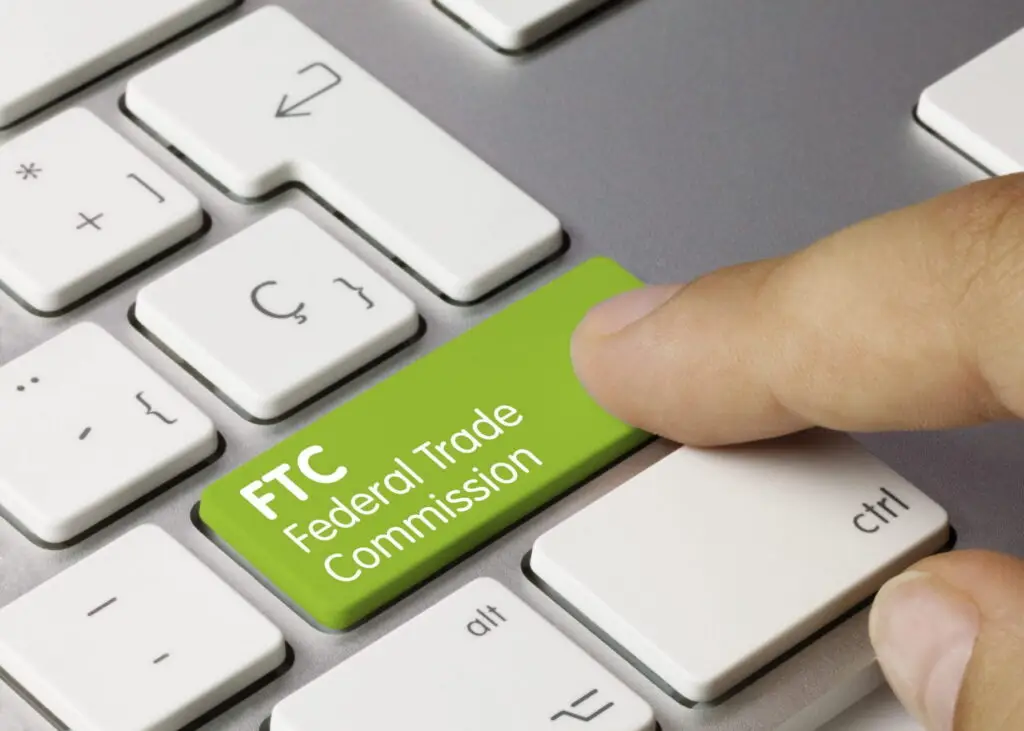
Facing allegations of Federal Trade Commission (FTC) violations can be overwhelming and pose significant risks to your business and personal reputation. The FTC enforces laws to maintain fair competition and protect consumers from deceptive practices, but investigations or charges can have far-reaching consequences. At Teakell Law, we provide strategic legal counsel to defend individuals and businesses against FTC violations, ensuring your rights are protected at every stage.

This page explores the types of FTC violations, potential penalties, and how Teakell Law can help you navigate these complex cases.

What Are FTC Violations?

FTC violations occur when businesses or individuals engage in practices that the Federal Trade Commission deems unfair, deceptive, or anticompetitive. The FTC has broad authority to enforce various laws, including:

  • The Sherman Act: Prohibits monopolistic practices and restraints of trade.
  • The Clayton Act: Addresses price discrimination, mergers, and other anticompetitive practices.
  • The FTC Act: Prohibits deceptive advertising, false claims, and other unfair business practices.

Common examples of FTC violations include false advertising, data privacy breaches, and engaging in practices that stifle competition. For more details on related charges, visit our page on White-Collar Crimes.

Common Types of FTC Violations

Deceptive Advertising: Making false or misleading claims about products or services.

Unfair Business Practices: Engaging in conduct that causes substantial harm to consumers, such as hidden fees or unfair contract terms.

Antitrust Violations: Engaging in monopolistic practices, price fixing, or bid rigging.

Data Privacy Breaches: Failing to safeguard consumer data or violating privacy laws.

Each type of violation requires a tailored legal defense. Learn more about defending against fraud-related allegations on our Fraud Defense page.

Penalties for FTC Violations

FTC violations can result in severe penalties that affect both businesses and individuals. The nature of the penalty depends on the specific violation and its impact.

Potential Consequences:

  • Fines: Corporations can face fines up to $100 million, while individuals may face fines up to $1 million.
  • Restitution: Businesses may be required to compensate consumers or competitors harmed by their practices.
  • Imprisonment: For severe antitrust violations, individuals may face up to 10 years in prison.
  • Injunctions: The FTC may seek court orders to stop ongoing violations.
  • Reputational Damage: Public investigations or penalties can harm a business’s credibility and customer trust.

Visit our Tax and Financial Crimes page for more information on penalties associated with financial misconduct.

Defending Against FTC Violations

Building a strong defense against FTC allegations requires a thorough understanding of antitrust and consumer protection laws. At Teakell Law, we analyze every aspect of the case to craft a strategy tailored to your specific circumstances.

Key Defense Strategies:

  1. Lack of Intent: Demonstrating that actions were unintentional or based on misinterpretations of regulations.
  2. Compliance Measures: Providing evidence of compliance programs designed to prevent violations.
  3. Challenging Evidence: Questioning the validity and sufficiency of the evidence presented by the FTC.
  4. Negotiating Settlements: Exploring settlement options to mitigate penalties and avoid lengthy litigation.

To understand more about defending your rights in complex cases, explore our page on Defending Multiple Charges.

How Teakell Law Can Help

Navigating FTC investigations and charges requires a skilled attorney who understands the complexities of federal laws and enforcement procedures. At Teakell Law, we provide:

  • Strategic Defense Planning: Tailoring defense strategies to your case specifics.
  • Experienced Representation: Leveraging extensive experience in federal cases, including antitrust and fraud allegations.
  • Proactive Guidance: Advising clients on compliance measures to avoid future violations.

Whether you’re facing charges or under investigation, our team is here to protect your interests and provide the legal support you need.

Contact Teakell Law Today

If you or your business is facing allegations of FTC violations, don’t navigate the complexities alone. Contact Teakell Law today to schedule a consultation. Our experienced attorneys are ready to fight for your rights, protect your business, and ensure the best possible outcome.

Extortion and Federal Threat Crimes

Legal Brief

THREATENING COMMUNICATIONS, EXTORTION, BLACKMAIL AND OTHER THREAT CRIMES IN FEDERAL COURT

By John Teakell Attorney-­‐at-­‐Law

Dallas, Texas

I. Generally Title 18 of the United State Code contains several federal crimes of extortion, communicating threats, and similar federal offenses, whether the communication is via “wire” or mail. Sections 871 through 880 of Title 18, U.S. Code, list these federal crimes: §871. Threats Against the President §872. Extortion by U.S. Officers or Employees §873. Blackmail §874. Kickbacks from Public Works Employees §875. Interstate Communications §876. Mailing Threatening Communications §877. Mailing Threats from Foreign Country §878. Threats Against Foreign Officials §879. Threats Against Former Presidents §880. Receiving Proceeds of Extortion

Generally, the crime of “blackmail” has become more known as “extortion.” Extortion is essentially threatening to do something, or disclose something, that will in some manner harm the potential victim of the threat. Often, the threat of the potential harm is done in attempts to obtain something of value, whether it is money or some non-­‐tangible benefit. It is a federal crime pursuant to the use of interstate or foreign communications (see Title 18, U.S. Code, §875, Interstate Communications), or the use of the mail (see Title 18, U.S. Code §876, Mailing Threatening Communications). A federal threat crime can also be prosecuted pursuant to the requirement that it involve a violation of federal law (see Title 18, U.S. Code, §873, Blackmail).

II. Commonly Used Charges

The most common extortion or extortionate threat prosecuted by a United States Attorney’s Office or by the U.S. Department of Justice is for Interstate Communications, which involves threats of harm (can be physical, economic, or other) that are carried out by the use of wire transmissions, such as emails, faxes, computer chats or messages, wires, or other interstate or foreign communications. Mailing threatening communications would have been considered a common method of communicating threats that violate federal criminal law several years ago, but with technological advances with computers and communications, more such threats are commonly communicated by an interstate transmission than by using the mail system.

A less-­‐commonly charged federal crime than threats by interstate communication, but probably more known by the public, is the federal offense of Threats Against the President. The U.S. Secret Service commonly investigates leads of persons who may appear to have made threats against the President of the United States, yet a small percentage are actually formally charged through the U.S. Attorney’s Office.

III. Threatened Harm

The threat has to be an actual threat, and the potential or threatened harm can be economic, but it does not have to be so. A threatened harm can be to reputation or to any information that would negatively affect a person or his/her business.

Title 18 U.S.C. §875, Interstate Communications, references a potential, or threatened: 1) kidnapping; 2) harm/injury to a person; 3) harm to the property of a person; or 4) harm to his reputation.

Title 18, U.S.C. §876, Mailing Threatening Communications, lists the same potential harms from a threat as the subject of prosecution: 1) kidnapping; 2) harm to a person; 3) harm to property; or 4) harm to reputation.

Note that Title 18, U.S.C. §873 contains the phrase “under a threat of informing, or as a consideration for not informing.” This is the classical blackmail/extortion situation, wherein a person would threaten to inform people or the public of a wrongdoing or an embarrassing matter, in order to obtain a payment for not disclosing such information. Such information could be the subject of a legitimate prosecution for criminal activity, yet the “blackmailer” or person making the extortionate threat, would still be guilty of committing the crime of extortion or blackmail (or making threatening communications, depending on how the prosecution charged the case).

IV. Extortionate Credit Transactions

Title 18 of the U.S. Code makes it illegal to make extortionate lending of credit, which is, in general terms, making loans with rates of interest in excess of 45%. These types of transactions are historically associated with organized crime figures and/or “loan sharking.”

Extortionate lending offenses are found at 18 U.S.C. §891, et seq., specifically at §§892 and 893.

V. Investigations

Investigations of threatening communications are often started by a complaining person, who claims to have been threated by email, text, mail, or some other manner. The Federal Bureau of Investigation, U.S. Postal Inspectors, U.S. Homeland Security and the U.S. Secret Service can investigate these complaints of threats or extortion. The U.S. Secret Service becomes aware of letters written to the President or other communications to the President or White House due to their monitoring for security reasons.

These federal investigations, like all other federal investigations, would be prosecuted by a United States Attorney’s Office in the district where the offense occurred, or it might be prosecuted by the U.S. Department of Justice. Some threats could be prosecuted in the District of Columbia, such as a threat against the President.

VI. Sentencing

Any person convicted in federal court of extortionate threats, blackmail, or threats against the President, is subject to the type of sentencing as in other federal cases. That is, such sentencings are guided by the U.S. Sentencing Guidelines, taking into consideration the recommendation punishment range from the calculations of the U.S. Sentencing Guidelines. These calculations depend on the base level of the particular guideline, plus the enhancements for factors that address the egregiousness of the incident(s). See the U.S. Sentencing Guidelines and U.S. Sentencing Guidelines Manual.

Prescription Fraud

Legal Brief

Prescription Fraud Prosecutions

By: John Teakell

Attorney-at-Law

Dallas, TX

Charges in both State and Federal courts where a person fills a forged prescription, phony prescription, or chooses to change what they were prescribed.

I. Generally

“Prescription Fraud” as it is commonly known, is obtaining controlled substances (illegal drugs) in a fraudulent manner by the use of a doctor’s prescription. Prescription fraud cases can be prosecuted in state or federal court depending on the complexity of the underlying activities, yet most of these cases are prosecuted in state court as a charge of obtaining controlled substances by fraud or a similar charge.

More complex fraudulent prescription fraud cases, such as a continual scheme to obtain controlled substances, or large volumes in numbers of prescriptions used, could result in a conspiracy charge or fraud scheme charged in federal court. These federal cases are to be distinguished from large numbers or unnecessary prescriptions given by a physician, known as “pill mill” cases. A pill mill is the name given to a physician’s office or clinic wherein doctors and other health care workers are accused of providing prescriptions for pain medications where there is no medical necessity.

II. Typical Prescription Fraud

The more-common prescription fraud case involves an individual who obtains controlled substances without a legitimate prescription, or the individual obtains more controlled substances than his/her prescription allows.

Another common variation of these prescription fraud cases includes obtaining prescriptions that, by themselves, would be legitimate; however, the patient obtaining the prescriptions is seeing several or numerous doctors, obtaining numerous prescriptions for the same, or same type of, substance without telling all the other doctors that he/she is seeing numerous doctors at the same time. Thus, the patient obtains numerous prescriptions that are issued by a physician, and the patient can obtain a lot more substances to feed his/her addiction, to create a high, or to sell the excess controlled substances. Often, the substances here are pain medication.

III. Types of Fraudulent Prescriptions

  • Altered prescriptions, that is, legitimate prescriptions with altered (increased) amounts of the substance to obtain additional amounts of legitimately prescribed drugs.
  • Stolen prescription forms from physicians’ offices that are written for fictitious patients.
  • Prescriptions to the real individual with forged doctor’s names.
  • Legitimate prescription forms from a physician with a different callback number where a co-conspirator “verifies” the prescription.
  • Calling in own prescriptions with their telephone number for a callback confirmation.
  • Computer-generated prescriptions for fictitious physicians.

IV. Indictments

Indictments charging criminal cases of prescription fraud are commonly prosecuted in state court as referenced above, and more complex schemes can be prosecuted in federal court.

The federal cases are charged as a violation of Title 21 of the United States Code, and state prosecutions are accomplished by a charge of Obtaining Controlled Substances by Fraud, or a similar charge. In state court in Texas, the statutes used for this prescription fraud are found in the Texas Health and Safety Code, §489.129.

Mortage Fraud

Legal Guide

MORTGAGE FRAUD CRIMES IN FEDERAL COURT

I. Generally

“Mortgage fraud” as it is generally called, is prosecuted in federal court as a felony offense that usually involves misrepresentations to a bank or other lender, or to a mortgage broker, real estate agent or seller of real estate. The ending result in a mortgage fraud case usually is a loss of monies by a lender on a foreclosure of the property due to the fact that: 1) the property was purchased without a real intent by the purchaser to move into the residence; 2) the borrower was a “straw borrower” or “straw purchaser” who was paid a nominal amount to represent himself as the borrower, when in fact he was listed as the title owner of the property yet did not intend to live in or take responsibility for the property; and/or 3) there is a “flip” or re-sale or double sale that is not represented or disclosed to the lender, which involves the fraudulent inflation of the property purchase price in order to facilitate the second sale to allow the purchaser (who becomes the seller immediately thereafter) to gain a significant amount of monies at closing that is not disclosed to the lender.

There are variations of these scenarios, but these are the most common ones found in mortgage fraud cases. These cases are investigated and prosecuted by the United States Attorney’s Office, that is, the federal prosecutor’s office.

II. Charges

Although the phrase “mortgage fraud” is commonly used by law enforcement, attorneys and the public, there is not a specific charge or offense in the federal criminal code that alleges “mortgage fraud.” Usually, the U.S. Attorney’s Office will seek an Indictment charging either one of these offenses or a combination of them:

  • 1) Bank Fraud – Title 18, U.S. Code, Section 1344;
  • 2) Mail Fraud – Title 18, U.S. Code, Section 1341;
  • 3) Wire Fraud – Title 18, U.S. Code, Section 1343;
  • 4) Conspiracy to Commit Fraud – Title 18, U.S. Code, Section 1349; and/or
  • 5) Money Laundering – Title 18, U.S. Code, Sections 1956 and/or 1957.

III. Indictments

Indictments charging criminal offenses in federal court are “returned” by a federal grand jury after the U.S. Attorney’s Office presents enough evidence to establish that probable cause exists to believe that a fraud involving real estate was committed. Once an Indictment is returned (meaning the target of the investigation, now the “defendant” is formally charged), there will be court appearances before the U.S. Magistrate Judge and the U.S. District Judge.

When an Indictment is returned, a warrant will issue from the U.S. District Clerk’s Office, and the Defendant will be arrested by federal agents. In lieu of an arrest, if a target of the investigation, or a Defendant (so named as a defendant when the Indictment is returned formally charging the person), has an attorney who has been in contact with the U.S. Attorney’s Office, the court may issue a summons that commands the Defendant to appear, rather than an arrest. Also, a Defendant whose attorney has contacted the U.S. Attorney’s Office may be allowed to surrender on the warrant without being arrested at his/her residence or place of employment.

IV. Investigations

Mortgage fraud investigations focus on properties that usually result in foreclosure and/or some type of monetary loss to the lender and or others. Purchasers who flip a house utilizing misrepresentations of fact regarding the origin of the down payment, their financial status or the financial status of a straw borrower, the occupancy status as a primary residence, are targeted for prosecution. The straw borrowers can also be prosecuted due to the fact that these people engaged in misrepresentations to the lender and others, even though they are usually not the orchestrators of mortgage fraud schemes. Loan brokers and real estate appraisers can be targeted and prosecuted for such participation, with appraisers mostly involved in fraudulently inflating the subject real estate values to facilitate the inflated second sale, or flip.

V. Negotiations, Trial, and U.S. District Court

Please see the Federal Criminal Process within the site for an explanation as to the federal criminal procedures in these types of cases.

VI. Sentencing

Any person convicted of fraud or other charges in federal courts is subject to a sentence that is largely controlled, or at least influenced, by the U.S. Sentencing Guidelines. The Sentencing Guidelines are a “point system” that is driven to a good degree in fraud or white-collar crime cases by the dollar amounts. That is, the higher the dollar amount of the fraud or the loss, then the more points that are added onto a defendant for Sentencing Guidelines purposes. Other enhancements, such as use of sophisticated means, and/or abuse of a position of skill or trust, are commonly assessed in fraud cases. The U.S. District Judge makes the final determination of a sentence, taking into consideration the recommendation punishment range from the calculations of the U.S. Sentencing Guidelines.

Cooperators with the U.S. government can be rewarded in the form of a sentence reduction, if the Defendant provides substantial cooperation.

Deceptive Business Practices in Texas

Legal Guide

Texas Deceptive Trade Practices Act (DTPA) – Deceptive Business Practices

Deceptive trade practice is an activity where business or individual engages in misleading or luring public into purchasing a product or service. In Texas, the Deceptive trade practice law has been designed to protect consumers from false or misleading advertisement. The Texas Deceptive Trade Practices Act (DTPA) thus prohibits vendors and salesmen from using

  • False statements
  • Duress
  • Exaggerations
  • Misleading advertisements to generate business

Of course; DTPA is a potential weapon against a business, which has treated consumer improperly. This means; if the business has made misrepresentations regarding its services and goods, if consumers have been harmed due to these misrepresentations then as per the state and federal law the business is obliged to compensate the consumer for the harm it might have caused. In fact past few years have witnessed literally an explosion of U.S. DTPA prosecutions and enforcement actions. There are ample examples of companies that are paying much higher penalties and fines than ever before. As a business owner you should also build your defense without any further delay if you are charged with DTPA. Consider retaining experienced Deceptive Business Practices Act lawyer to give professional guidance and training.

Texas and federal laws thus cover a whole array of acts, which are regarded as unlawful if engaged in a transaction between a seller and the consumer.

As briefed earlier the act is pretty broad and covers a number of situations, such as

  • Misrepresenting the quality of goods offered for sale
  • Misrepresenting the characteristics or value of the goods offered for sale
  • Not disclosing information about goods or services intentionally
  • Not disclosing information about goods or services to lure the consumer to entering into a transaction
  • Breaching an warranty
  • Financing that is fraudulent or misleading
  • Wrongful debt collection
  • Taking advantage of the consumer’s language skills, or not reading well
  • Using false or misleading advertising
  • Exaggerating the benefits of a product
  • Passing off a used product as a new one
  • Making false allegations about a competitor
  • Price gouging after natural disaster or catastrophe

The Law Office of John R. Teakell is committed to the best representation for clients who are under investigation for, or who are charged with, DTPA – Texas Deceptive Trade Practices Act. Armed with his skill, industry knowledge and experience he is an expert in handling such cases

Types of Deceptive Trade Practices

Deceptive trade practices come in a number of forms. Here are a few examples of deceptive trade practices –

False Advertising : It is illegal in Texas and it includes making false statements about

  • The advertiser’s product
  • The competitor’s product

Keep in mind; only objective claims may violate false advertising laws and subjective claims such as “professional grade” or “best value for your money” are harder to enforce.

Bait and Switch: This type of scam occurs when an advertiser lures a customer into a store for a particular product and gets the customer to purchase similar item however the deal in such cases is always better for the seller.

Odometer Tampering: The Texas vehicle code also makes it unlawful to change the mileage on an odometer.

Deceptive Pricing: Texas law prohibits retailers to list “regular” prices with a “sale”. This involves marking up the regular price of a particular item to make the buyer believe that they are getting a better deal.

Low Stock Scams: The state and federal law prohibits sellers from listing a low price for an item with a low stock

Penalties for Unethical Trade Practices

Charges for DTPA carry huge penalties. Foolproof defense is vital for defending and protecting your business against these charges. Experienced criminal defense attorney in Dallas , John R Teakell can help in protecting your future from such severe charges

The fact of the matter is; certain violations of the consumer protection laws are categorized as criminal acts punishable in Texas as MISDEMEANOR offenses. For instance; the retailer falsely advertising that it is going out of business or misrepresenting itself as a wholesaler can be convicted of a misdemeanor. It carries a punishment by fines ranging from $100 to $500.

Other violations, for instance pyramid promotional schemes, are prosecuted as FELONY criminal offenses.

Grading of offenses —

Consumer Product Safety

The most common form of consumer protection is ensuring product safety. This segment is typically handled by the Consumer Product Safety Commission (CSPC). The ideal of the commission is to ensure that all producers adhere to strict safety standards. Remember, the CSPC has the authority to order a recall of an item that does not meet those standards.

Warranties

Another common area of dispute involves warranties. Following are the 3 different kinds of warranties with which the consumer can hold the business accountable to:

  • Express Warranty: This type of warranty is always written down and it thus includes the product’s paperwork. Most products have express warranties.
  • Merchantability Warranty: This is an implied warranty that labels the product as fit to sell and functions as intended.
  • Fitness Warranty: This is an implied warranty. It assumes the seller will provide products to the buyer that suit that buyer’s need and purpose.

Lending Laws

All lenders are required by law to fully provide and explain the complicated finance terms and conditions attached to many forms of credit.

A violation of this section constitutes:

  • Felony of the THIRD DEGREE if the amount involved exceeds $2,000
  • Misdemeanor of the FIRST DEGREE if the amount involved is $200 or more but $2,000 or less
  • Misdemeanor of the SECOND DEGREE if the amount involved is less than $200 or when the amount cannot be ascertained
  • When the victim of the offense is 60 years, the grading of the offense shall be one grade higher

How John Teakell the best criminal defense attorney can help.

John. R. Teakell employs a strong defense and a practical approach to assist his clients before a problem arises. Needless to say; an ounce of prevention in deceptive trade practices can save many millions of dollars in investigative costs and sanctions. As the best federal defense attorney , Teakell know how to prosecute civil enforcement actions of fraudulent schemes

As a matter of fact; the attacks on the evidence offered by a consumer is difficult to prove at a trial unless there is written documentation to support the allegations. As a skilled federal defense lawyer, Teakell has successfully prosecuted all types of federal crimes in the Northern District of Texas. He will work toward the goal of closing the investigation with no prosecution, which would prevent any DTPA charges.

He stands ready to assist in your case, not only in court appearances, but also in preparing evidence to rebut the government’s case or in the preparation of a trial defense. Schedule an Appointment with Deceptive Trade Practices Lawyer – John R. Teakell

Counterfeit Currency Charges

Prosecution of Counterfeit Money Possession and Passing Counterfeit Monies

By John Teakell
Attorney-at-Law
Dallas, Texas

I. OVERVIEW

Prosecutions in federal district courts in the United States (U.S. District Courts) for violations of counterfeit currency are prosecuted by the United States Attorney’s Office, and usually are investigated by the federal investigative agency known as the United States Secret Service (“Secret Service” or “USSS”). These federal violations start when persons create or print counterfeit currency (money or cash) to imitate genuine currency authorized and printed by the U.S. Treasury Department. Some counterfeit currency printers have sophisticated operations that produce counterfeit currency bills that are difficult to distinguish from genuine United States currency. Others can produce counterfeit bills from home printers that are more readily distinguished from genuine currency.

Commonly, these charges include:

  • Possession of counterfeit currency (sometimes known as “funny money”);
  • Manufacture of counterfeit currency;
  • Passing counterfeit currency or sale of counterfeit currency;
  • Possessing counterfeit currency plates or electronic images for counterfeiting;
  • Conspiracy to manufacture, possess and pass counterfeit currency.

These federal violations, or “counterfeit cases” as these are sometimes called, are found in Title 18, United States Code, Sections 470, et seq. Currency is referred to as “obligations or securities of the United States” in these federal statutes.

II. COUNTERFEITING CHARGES OFTEN USED IN INDICTMENTS

A. Making, Altering or Counterfeiting Obligations or Securities of the United States

  • “Obligations or Securities of the United States”
  • Title 18, United States Code, Section 471
  • “Manufacturing” or “making” counterfeit currency is commonly charged under this statute, as the statute wording clearly sets forth the violation. It is sometimes plead in the Indictment as:
  • “…with intent to defraud, falsely made, forged, and counterfeited obligations of the United States…”

B. “Uttering Counterfeit Obligations or Securities”

Title 18, United States Code, Section 472

Possessions of counterfeit money and sales of counterfeit monies are usually prosecuted under this statute. This statute reads:

“Whoever, with intent to defraud, passes, utters, publishes, or sells, or attempts to pass, utter, publish or sell, or with like intent brings into the United States or keeps in possession or conceals any falsely made, forged, counterfeited, or altered obligation or other security of the United States, shall be fined under this title or imprisoned not more than 20 years, or both.”

Counterfeit Charges: Legal Consequences and Defenses

Facing charges of counterfeiting can be overwhelming, as federal and state laws impose severe penalties for those convicted of producing or distributing counterfeit goods or currency. If you are accused of counterfeiting, it is essential to understand the legal implications and available defenses. At Teakell Law, we have extensive experience defending clients against counterfeit charges, ensuring that every case is handled with diligence and strategic planning.

This page provides an overview of counterfeiting laws, the penalties you may face, and how Teakell Law can build a strong defense for your case.

What Constitutes Counterfeiting?

Counterfeiting involves the illegal production or distribution of items that imitate genuine goods or currency, typically with the intent to deceive. While most people associate counterfeiting with fake money, it can also include a wide range of goods, from luxury brand knockoffs to fraudulent documents.

Common types of counterfeiting include:

  • Counterfeit Currency: Producing fake money to circulate as legitimate currency.
  • Counterfeit Goods: Manufacturing or selling fake versions of branded items such as clothing, electronics, or accessories.
  • Counterfeit Documents: Creating fraudulent documents like passports, driver’s licenses, or government-issued identification.

Charges for counterfeiting often overlap with other crimes such as fraud or identity theft, leading to more severe legal consequences. For more information on related offenses, explore our page on fraud charges.

Federal Laws Governing Counterfeit Charges

Federal laws take counterfeiting offenses seriously, especially when it involves the illegal production of currency or the trafficking of counterfeit goods. Under Title 18 U.S. Code § 471-474, counterfeiting U.S. currency is punishable by up to 20 years in prison. Similarly, trafficking counterfeit goods can result in substantial fines and imprisonment.

In addition to federal statutes, offenders may face penalties under the Trademark Counterfeiting Act, which protects brands from unauthorized imitation of their products. Violating this act can lead to hefty fines and imprisonment, especially if the counterfeited items pose health or safety risks.

If you’re dealing with federal counterfeit charges, it’s essential to understand the nuances of federal laws and how they differ from state laws. Learn more on our federal versus state crime defense page.

Penalties for Counterfeiting

The penalties for counterfeiting vary based on the nature of the crime, the items involved, and the extent of the counterfeiting operation. Some common penalties include:

  • Imprisonment: Federal counterfeiting charges can lead to prison sentences ranging from 5 to 20 years, depending on the severity of the crime. Those convicted of producing counterfeit currency may face longer sentences.
  • Fines: Convictions often include significant fines, which can reach up to $250,000 or more, particularly in cases involving large-scale operations.
  • Restitution: Courts may require offenders to pay restitution to any victims affected by the counterfeiting, including businesses and consumers who suffered financial harm.
  • Seizure of Assets: In many cases, the government may seize any assets used in the counterfeiting operation, including equipment, property, or vehicles.

These penalties can have life-altering consequences, making it essential to have a strong defense. To understand the broader implications of federal penalties, visit our page on federal crime penalties.

Common Defenses Against Counterfeit Charges

Fighting counterfeit charges requires a comprehensive understanding of the law and the specific facts of your case. At Teakell Law, we work closely with our clients to identify weaknesses in the prosecution’s case and develop effective defense strategies. Some common defenses include:

  • Lack of Intent: Many counterfeiting laws require the prosecution to prove that the defendant intended to deceive others. If the defendant was unaware that the goods or currency were counterfeit, this lack of intent can be a strong defense.
  • Mistaken Identity: In some cases, individuals may be wrongfully accused of counterfeiting, especially in large-scale operations. Demonstrating that someone else was responsible for the crime can result in the charges being dropped.
  • Entrapment: If law enforcement officials coerced or persuaded the defendant to engage in counterfeiting, the defense of entrapment may be used.
  • Insufficient Evidence: The prosecution must provide sufficient evidence to prove the defendant’s guilt beyond a reasonable doubt. Challenging the quality or quantity of evidence can weaken the prosecution’s case.

For more details on how we approach defending clients facing serious criminal charges, check out our white-collar crime defense strategies.

The Role of Federal and State Laws in Counterfeiting

Both federal and state laws govern counterfeiting offenses. While federal laws handle most large-scale counterfeiting cases, particularly those involving currency or major trafficking operations, state laws may apply to smaller cases involving counterfeit goods or local counterfeit operations.

Understanding the distinction between federal and state charges is crucial when building a defense. You can explore the differences between federal and state crime defense to learn more.

Why Choose Teakell Law?

Facing counterfeit charges can be daunting, but with the right legal team by your side, you can build a strong defense. At Teakell Law, we have a wealth of experience defending clients against serious counterfeiting charges, and we are committed to fighting for the best possible outcome.

Why Clients Trust Teakell Law:

  • Experienced Legal Representation: We have a proven track record of defending clients in both state and federal courts, particularly in complex counterfeiting cases.
  • Comprehensive Case Analysis: We thoroughly investigate every detail of your case to uncover potential legal errors or procedural missteps.
  • Tailored Defense Strategies: Every case is unique, and we provide personalized defense strategies designed to meet the specific circumstances of your case.

Contact Teakell Law for a Strong Defense

If you or someone you know is facing counterfeiting charges, don’t wait to seek legal representation. Contact Teakell Law today to schedule a consultation and start building your defense. Our experienced attorneys are ready to protect your rights and help you navigate the complexities of your case.